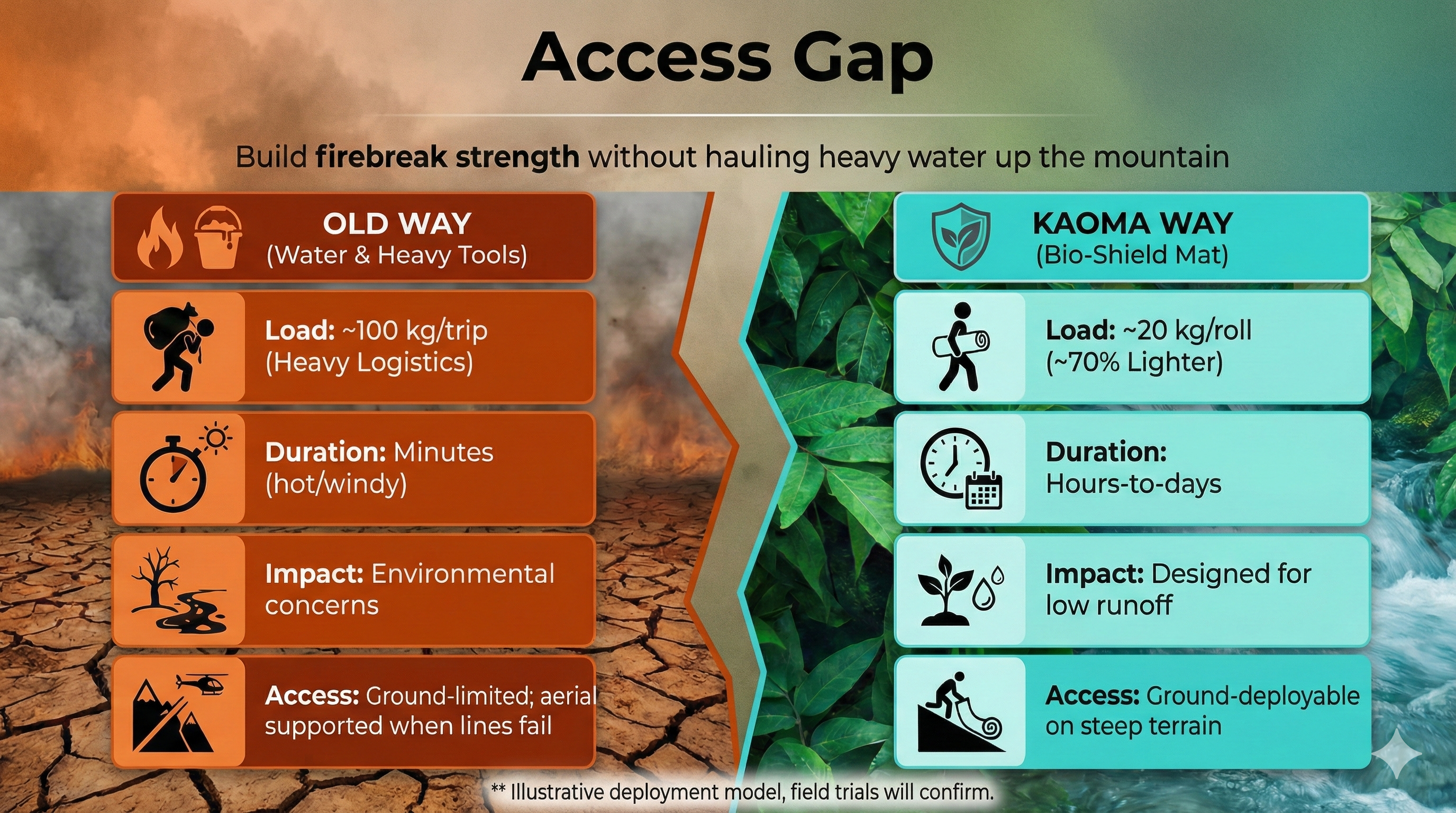
The Access Gap in Wildfire Prevention
Understanding the core challenge that shapes our engineering approach
Problem
Wildfires in Thailand recur year after year, creating repeated damage to ecosystems and communities. Beyond immediate fire events, the downstream effects—smoke exposure, disrupted livelihoods, and long recovery timelines—make prevention and early containment especially important.
However, prevention work often faces a critical access barrier. In steep or remote terrain, transporting equipment and supplies is difficult, and time windows are tight. Firebreak preparation becomes labor-intensive, and solutions that rely on heavy logistics or complex deployment can fail to match real constraints on the ground. This creates a gap: prevention tools must be portable, practical, and designed for the realities of field operations.
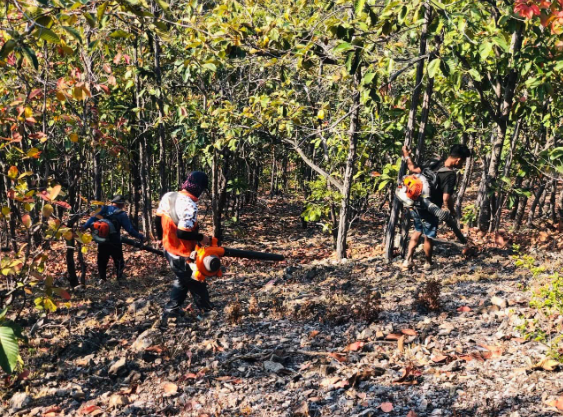
Making firebreaks in hard-to-reach terrain
What a Realistic Tool Must Respect
The Access Gap